Strategy
Strategic Plan 2024 to 2028
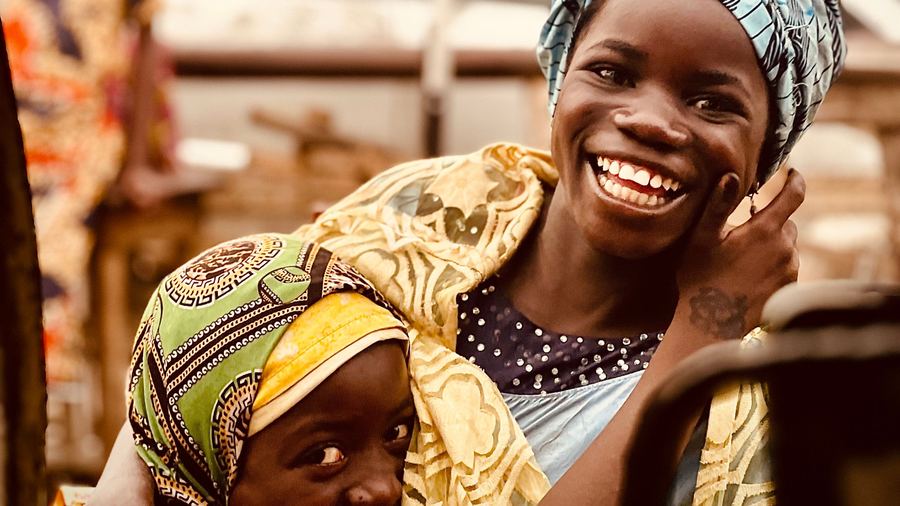
Five strategic objectives set out how FWO grows from community projects into an accountable, resilient organization.
At Friends of Women Outreach, we believe every woman and girl deserves the opportunity to live a healthy, safe, dignified and economically independent life. We work alongside women, girls and underserved communities in Sierra Leone to address the barriers that limit their health, rights, opportunities and potential.
For many women and girls, poor access to healthcare, gender-based violence, economic insecurity and climate vulnerability are deeply interconnected. Addressing one without the others often leaves women trapped in cycles of disadvantage.
That is why FWO brings together health, rights, economic empowerment, research and environmental action to create integrated solutions that respond to women's lived experiences.
We do not simply deliver services. We work with communities to build knowledge, strengthen agency, expand opportunities and create lasting change.
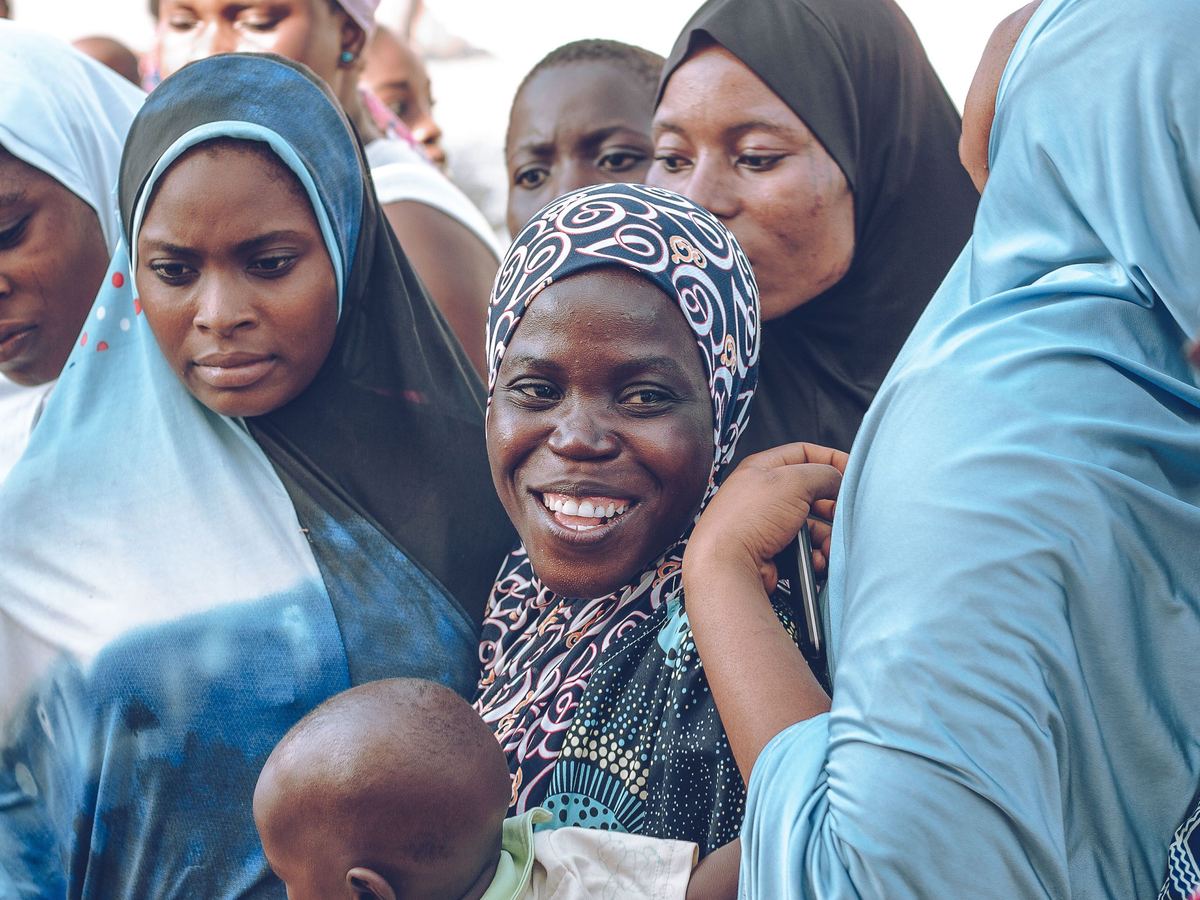
We combine community knowledge with evidence-informed interventions, peer leadership, strategic partnerships and practical innovation.
Our programmes are designed with the people they serve, ensuring that women and girls are not only beneficiaries but active participants, leaders and decision-makers.
Five strategic objectives set out how FWO grows from community projects into an accountable, resilient organization.

A peer-led initiative supported by the AstraZeneca Step Up Grant.
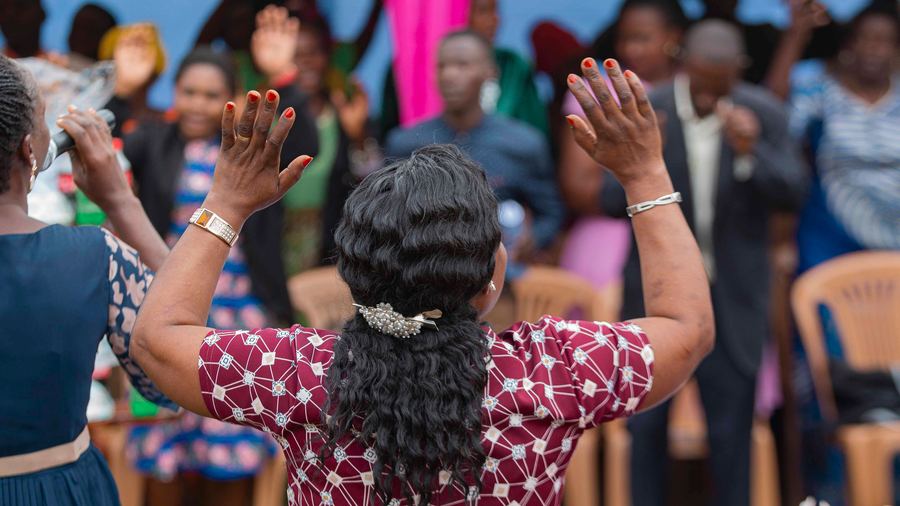
New programmes, partnerships, trainings and community events will appear in this space.
A short film and stories from participants, peer facilitators and partners will live here.
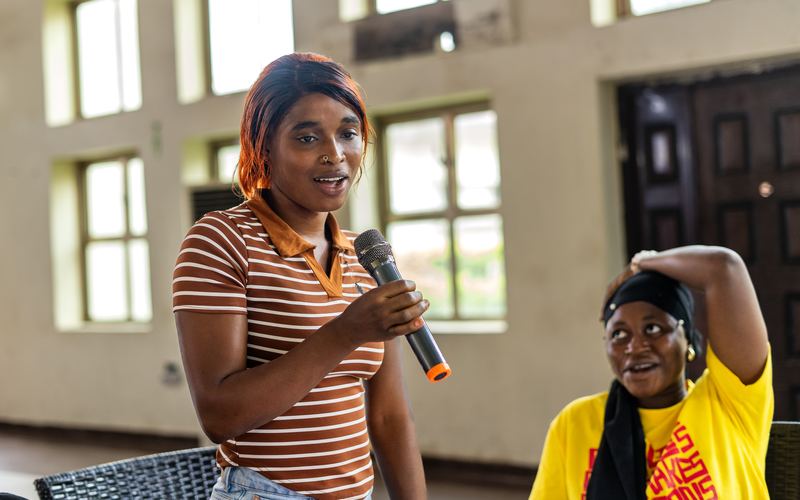
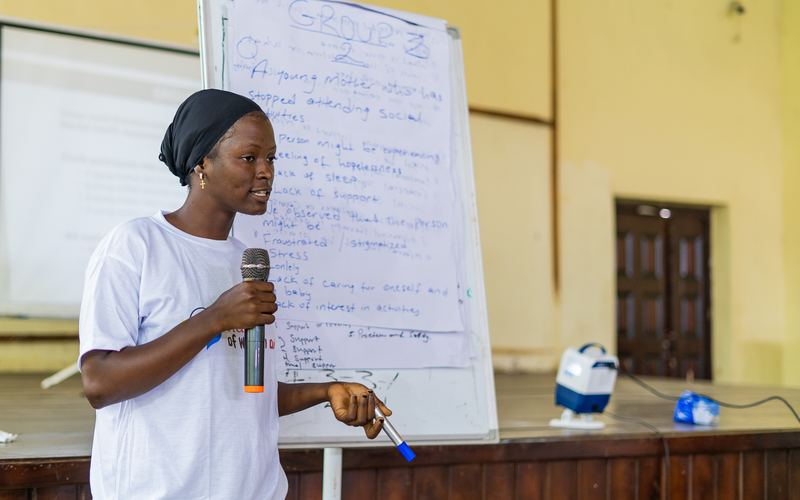
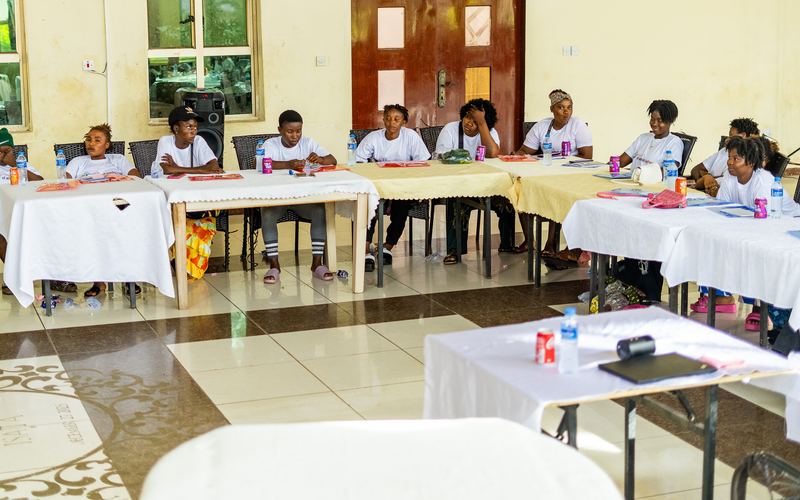
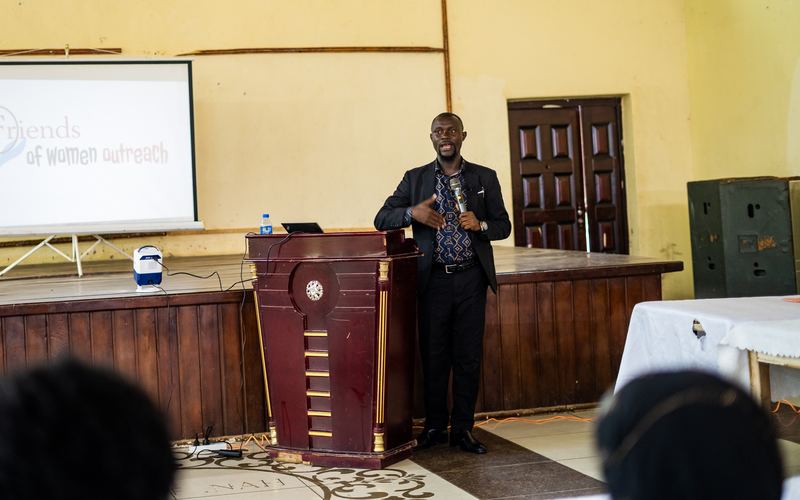
Friends of Women Outreach (FWO) is a community-rooted nonprofit based in Koidu Town, Kono District, Sierra Leone, advancing the health, rights, dignity and socioeconomic empowerment of women, girls and vulnerable communities.
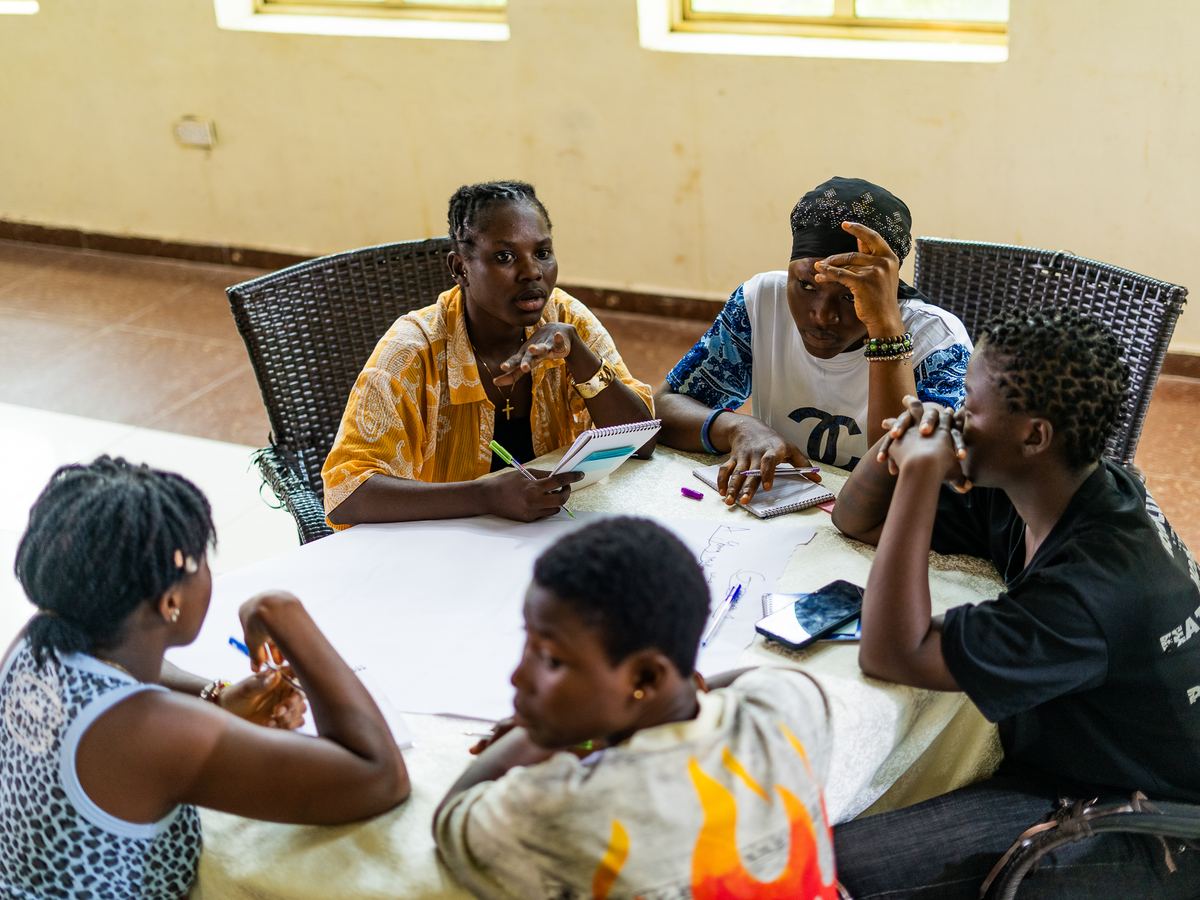
Our work responds to the interconnected challenges of gender inequality, limited access to essential health services, economic exclusion, psychosocial distress and environmental vulnerability.
We believe that meaningful change begins when women and girls have the knowledge, resources, opportunities and confidence to shape their own futures.
Through community engagement, capacity building, advocacy, research and locally driven programmes, FWO works to create environments where women and girls can thrive.
A just and inclusive society where every woman and girl enjoys good health, equal rights, economic independence and the opportunity to reach her full potential.
To empower women and girls in Sierra Leone by improving access to health services, advancing gender equality and rights, strengthening sustainable livelihoods, promoting evidence-based advocacy, and supporting women-led climate resilience.
Founded in 2015
FWO was established in 2015 in response to the persistent social, health and economic inequalities affecting women and girls in underserved communities in Sierra Leone.
Our work is grounded in the understanding that women's wellbeing cannot be separated from their economic opportunities, social environments, personal safety and ability to make informed decisions about their lives.
Over time, FWO has developed community-focused initiatives addressing health education, substance use prevention, mental health resilience, youth empowerment and entrepreneurship.
Our experience working with vulnerable teen mothers in Kono District has reinforced the importance of integrated interventions that respond to both immediate needs and the underlying causes of vulnerability.
From the beginning, FWO's activities have centred on community-based health education, peer-led learning and awareness-raising, mental health and substance use prevention, youth empowerment, and entrepreneurship and livelihood support for women and young people.
Today, FWO continues to strengthen its programmes and partnerships while exploring innovative approaches that place women and girls at the centre of sustainable community development.
We prioritize those facing the greatest barriers to health, rights and opportunity.
We recognize the inherent worth, autonomy and lived experiences of every individual.
We believe sustainable solutions must be shaped and led by the communities they serve.
We uphold transparency, ethical practice and responsible stewardship of resources.
We embrace evidence, creativity and continuous improvement to address complex challenges.
We believe lasting change requires collective action across communities, institutions and sectors.
Our work is driven by a committed team bringing together experience in community development, health promotion, programme management, advocacy and organizational leadership.
Strategic leadership, partnerships and organizational development.
Programme strategy, implementation and technical oversight.
Financial management, accountability and compliance.
Administration, communication and stakeholder engagement.
Community mobilization and programme implementation.
Our team works alongside trained peer facilitators, community volunteers, technical specialists and local partners to deliver inclusive, community-responsive interventions.
Gives overall direction and approves major strategic decisions.
Supports oversight and accountability.
Leads and guides delivery of approved priorities.
Checks financial accountability and the use of resources.
Partnerships are central to our approach. We collaborate with funding institutions, community leaders, technical professionals, grassroots organizations and local service providers to strengthen programme quality and expand community impact.
Supporting our work with vulnerable teen mothers in Koidu Town.
Supporting youth substance use prevention programming.
Our community relationships include local leaders, peer facilitators, mental health professionals, entrepreneurship mentors and relevant health and social service providers.
We welcome partnerships that strengthen women's health, gender justice, economic opportunities, research and climate resilience.
Strategic innovation and a clear theory of change guide everything we do.
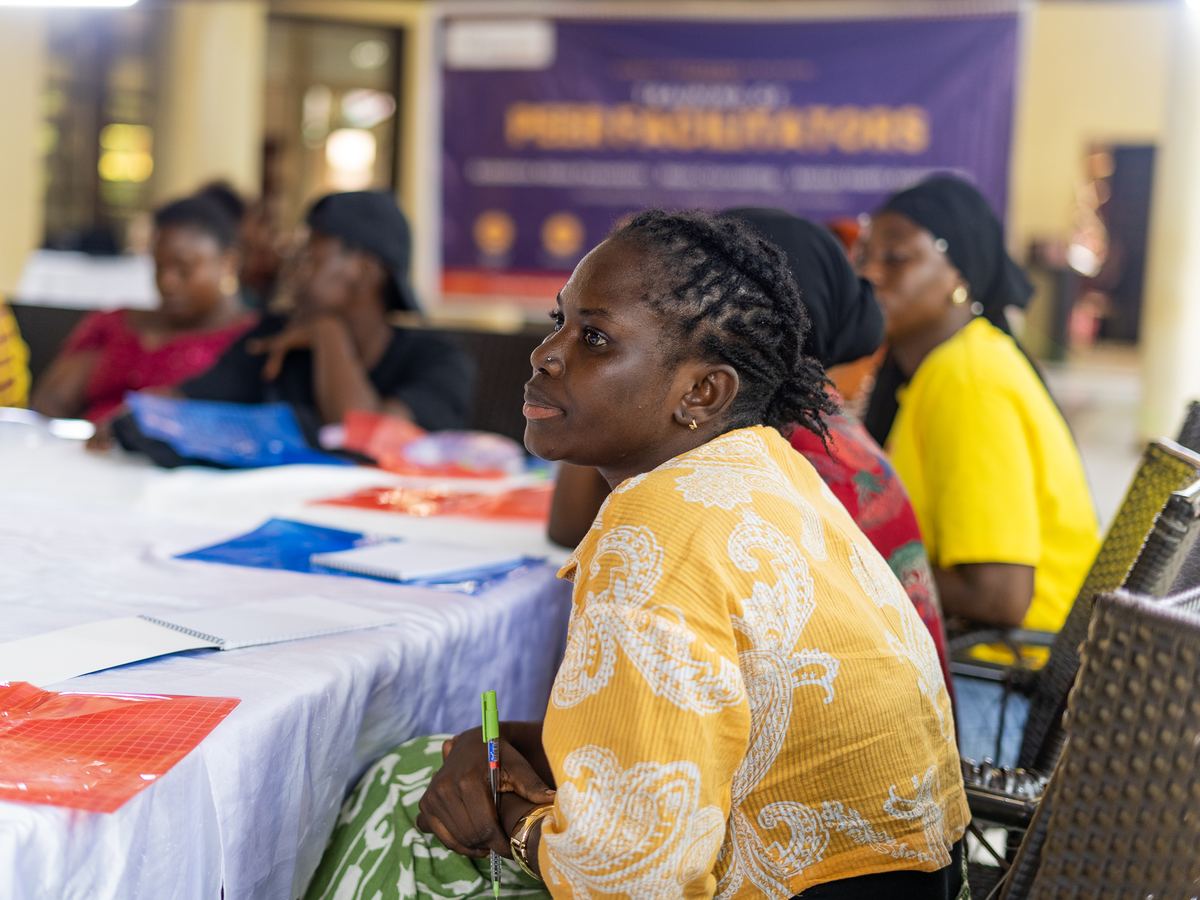
Across Sierra Leone, women and girls face overlapping barriers that limit their ability to live healthy, safe and economically independent lives.
A young mother may struggle with mental health challenges while also facing unemployment and limited childcare. A girl experiencing gender-based violence may lack access to protection services, education and economic opportunities. Women whose livelihoods depend on natural resources may face growing climate-related pressures without the support needed to adapt.
These challenges rarely exist in isolation.
FWO exists to address these interconnected inequalities through community-led, integrated and evidence-informed solutions. Lasting empowerment requires more than awareness or short-term assistance. It requires strengthening women's agency, improving access to essential services, expanding economic opportunities, and transforming the systems and social norms that sustain inequality.
Improving access to sexual and reproductive health, mental health, maternal care and community-based health education.
Women and girls face significant barriers to accessing reliable health information, preventive services, sexual and reproductive healthcare, maternal care and mental health support. Stigma, poverty and limited access to appropriate services can further deepen these inequalities.
Healthy women, stronger families and thriving communities.
See the related programme →Strengthening women's and girls' rights, preventing gender-based violence, and promoting access to justice and protection services.
Gender-based violence, harmful social norms, limited legal awareness and barriers to protection services restrict women's and girls' safety, autonomy and opportunities.
Every woman has rights, and every girl is safe.
See the related programme →Expanding entrepreneurship, vocational skills, financial literacy and sustainable livelihood opportunities for women and young people.
Economic insecurity limits women's ability to make independent decisions, access essential services, and protect themselves and their families from vulnerability.
Economic independence creates choices.
See the related programme →Generating community-informed evidence to influence policies, strengthen programmes and advance gender-responsive development.
Policies and programmes are most effective when informed by credible evidence and the lived experiences of the people they are intended to serve. Yet the perspectives of marginalized women and girls are often underrepresented in research and decision-making.
Community voices turned into meaningful change.
See the related programme →Supporting women-led environmental stewardship, climate adaptation and sustainable community practices.
Climate change and environmental degradation can disproportionately affect women and girls, particularly those living in low-income households and communities dependent on climate-sensitive livelihoods. Environmental risks can undermine health, water security, food security and household economic resilience.
Women at the heart of climate solutions: leaders developing practical ways to protect families, livelihoods and the environment.
See the related programme →If women and girls have equitable access to health information and services, protection, practical skills, economic opportunities and meaningful participation in decisions affecting their lives, and if communities and institutions are equipped to address harmful social norms, structural barriers and environmental risks, then women and girls will be better positioned to exercise their rights, improve their wellbeing, achieve economic independence and lead sustainable change within their communities.
We combine community knowledge with evidence-informed interventions, peer leadership, strategic partnerships and practical innovation.
Health, rights, economic security and environmental wellbeing are interconnected. Our programmes address multiple barriers rather than treating each challenge in isolation.
Women and girls are active partners in identifying needs, designing interventions, delivering activities and evaluating results.
We invest in people with lived experience, including teen mothers and young women, as peer educators, facilitators, mentors and community advocates.
We combine community knowledge, participatory research, monitoring and learning to improve programme effectiveness and inform advocacy.
We explore locally appropriate models, including social enterprises and community-owned initiatives, that can generate lasting social and economic value.
Our programmes are designed with the people they serve, ensuring that women and girls are not only beneficiaries but active participants, leaders and decision-makers.
We do not simply deliver services. We work with communities to build knowledge, strengthen agency, expand opportunities and create lasting change.
Each programme responds to one of our five areas of impact and works through community outreach, peer-led education and practical skills.
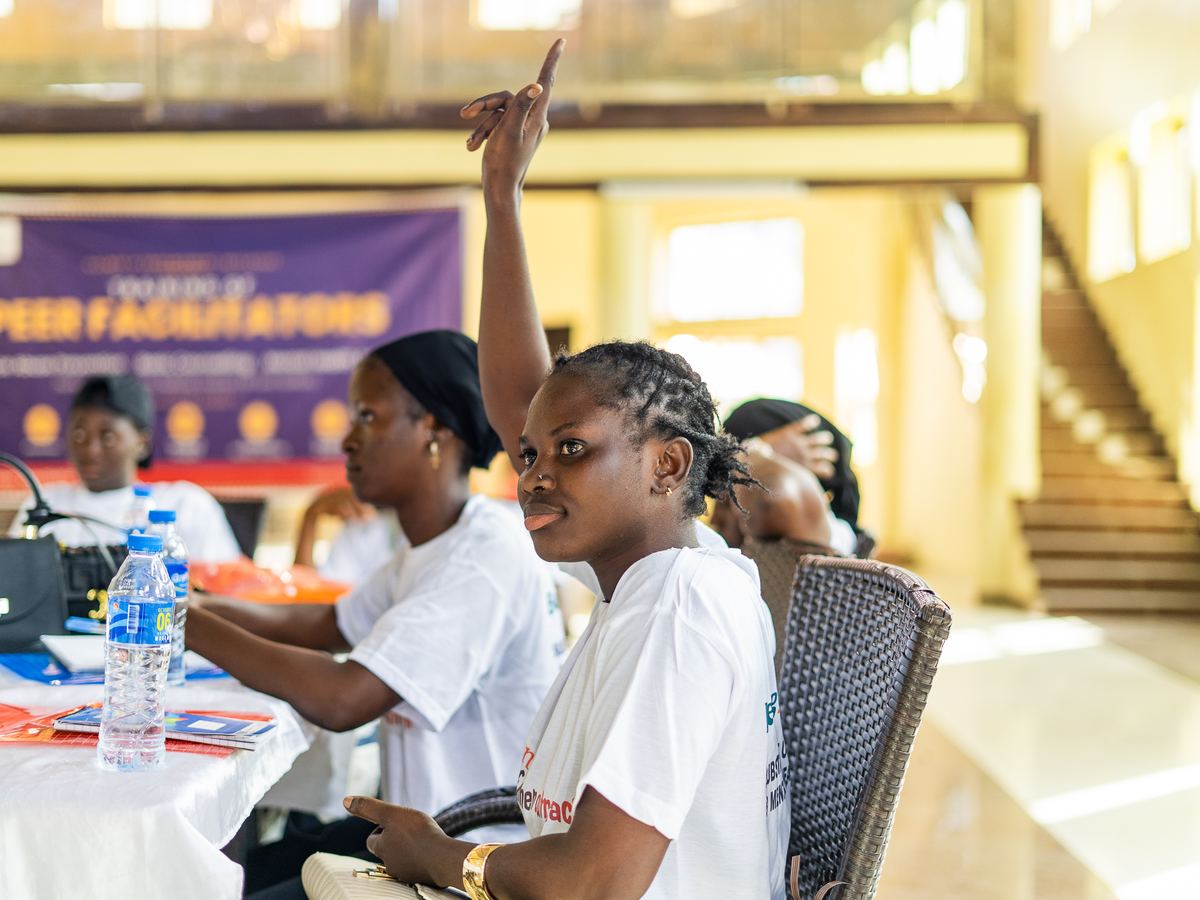
Healthy women. Stronger families. Thriving communities.
Women and girls face significant barriers to accessing reliable health information, preventive services, sexual and reproductive healthcare, maternal care and mental health support. Stigma, poverty and limited access to appropriate services can further deepen these inequalities.
FWO promotes equitable access to women's health information and services through community health education, peer support, awareness campaigns and partnerships with qualified healthcare providers.
With support from Grand Challenges Canada, FWO delivers a structured psychoeducational curriculum with peer support and entrepreneurship development to strengthen mental health resilience and prevent substance use among vulnerable teen mothers in Koidu Town.
Through the AstraZeneca Step Up Grant, FWO implemented youth-focused substance use prevention programming in Freetown, contributing to its experience in community health promotion and youth engagement.
Every woman has rights. Every girl deserves safety.
Gender-based violence, harmful social norms, limited legal awareness and barriers to protection services restrict women's and girls' safety, autonomy and opportunities.
FWO works to strengthen rights awareness, promote gender equality, prevent violence and support community-based protection systems.
We engage women, girls, community leaders, caregivers and relevant institutions to promote safer environments and strengthen access to support.
Economic independence creates choices.
Economic insecurity limits women's ability to make independent decisions, access essential services, and protect themselves and their families from vulnerability.
FWO supports women and young people to build practical skills, develop businesses, access livelihood opportunities and strengthen financial independence.
Our livelihood work helps vulnerable teen mothers combine psychosocial support with business skills, mentoring and savings.
Turning community voices into meaningful change.
Policies and programmes are most effective when informed by credible evidence and the lived experiences of the people they are intended to serve. Yet the perspectives of marginalized women and girls are often underrepresented in research and decision-making.
FWO seeks to strengthen community-informed research, programme learning and evidence-based advocacy to advance gender-responsive policies and practices.
We aim to ensure that research and advocacy amplify community voices, respect participant rights and contribute to meaningful improvements in services and policies.
Women at the heart of climate solutions.
Climate change and environmental degradation can disproportionately affect women and girls, particularly those living in low-income households and communities dependent on climate-sensitive livelihoods. Environmental risks can undermine health, water security, food security and household economic resilience.
FWO seeks to promote women-led environmental stewardship and community-based climate resilience.
We envision women and girls not only as people affected by climate change but as leaders developing practical solutions that protect families, livelihoods and the environment.
Meaningful and sustainable development requires collaboration. We welcome individuals, institutions, community organizations, researchers, businesses and development partners who share our commitment to women's health, rights, economic empowerment and climate resilience.
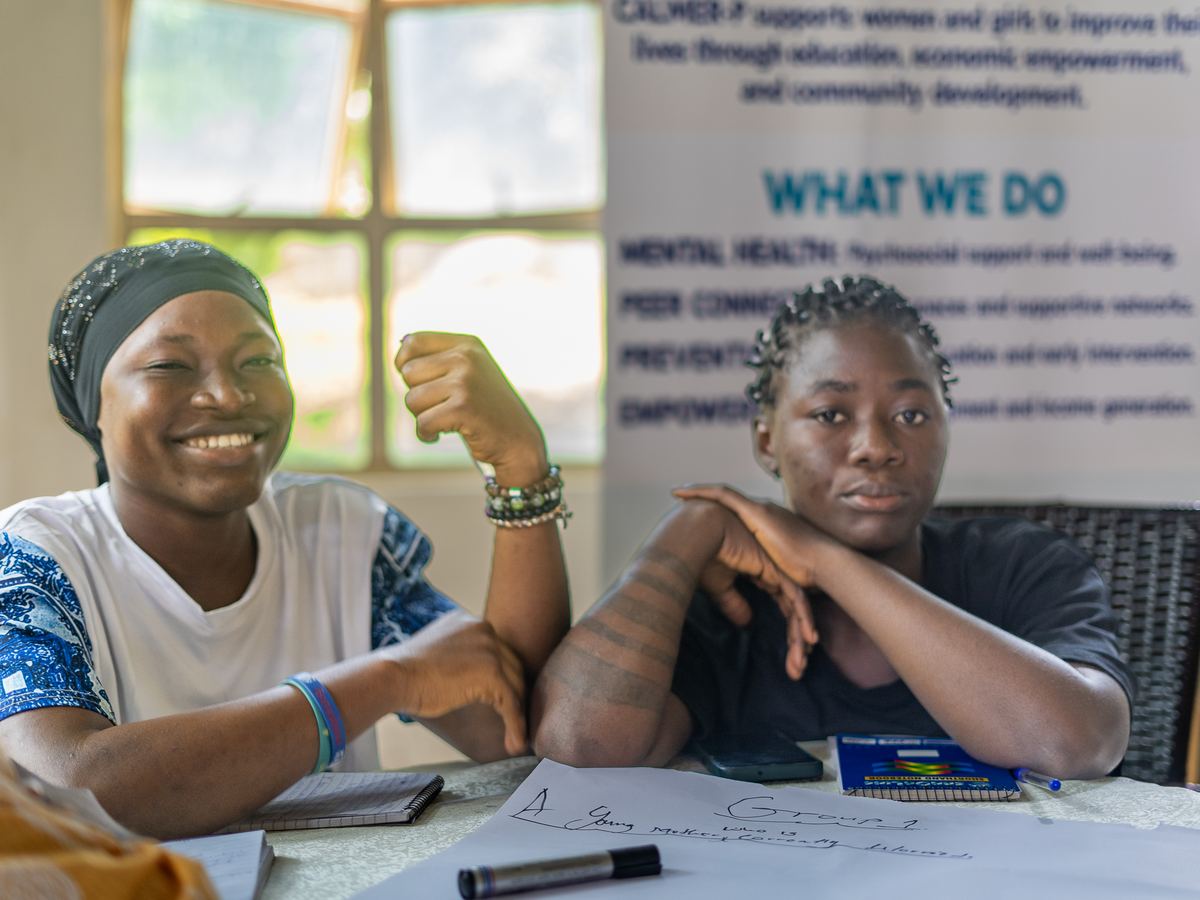
We collaborate with organizations interested in co-designing, funding, implementing and evaluating community-based programmes.
Our partnership interests include women's health, mental health, gender justice, sustainable livelihoods, research and climate resilience.
Your support can help expand access to essential services, strengthen community-led interventions and create economic opportunities for vulnerable women and girls.
We welcome institutional grants, philanthropic contributions, technical assistance and in-kind support aligned with our mission.
We value individuals who bring their time, knowledge, skills and commitment to community development.
Volunteer opportunities may include community outreach, youth education, mentorship, programme support, communications and research.
We welcome collaboration with universities, research institutions, health professionals and technical partners interested in developing and evaluating evidence-informed solutions.
Our priority areas include women's health, psychosocial wellbeing, gender equality, entrepreneurship and climate resilience.
FWO seeks committed individuals who believe in community-led development, gender equality, accountability and social impact.
Current opportunities, when available, will be announced through this page.
Funders, health facilities, schools, training institutions, government departments, community groups, social enterprises, researchers and other nonprofits.
We follow safeguarding practices that include informed consent, confidentiality and appropriate referral. Children and vulnerable participants come first.
Yes. We welcome technical assistance and in-kind support aligned with our mission.
We welcome research partnerships. All research should respect participant rights, consent and confidentiality.
When you write, please include your full name, email address, organization (optional), a subject and your message.